What's all this then?


My name is Victoria Stiles and I'm an Early Career Historian currently doing whatever odd research / consulting / outreach / tutoring jobs come my way. I blog here about some of the interesting texts I've found.
My research focusses on books about Britain and the British Empire which were in circulation in Nazi Germany but you'll also find a smattering of school textbooks, witchcraft beliefs, bog drainage, bemused travellers and weird illustrations that caught my eye.
Translations from German are my own. Comments are currently unmoderated and are mostly spam for leather jackets anyway.
Showing posts with label trivia. Show all posts

Monday, 12 March 2012

Power from Mt. Vesuvius, 1939


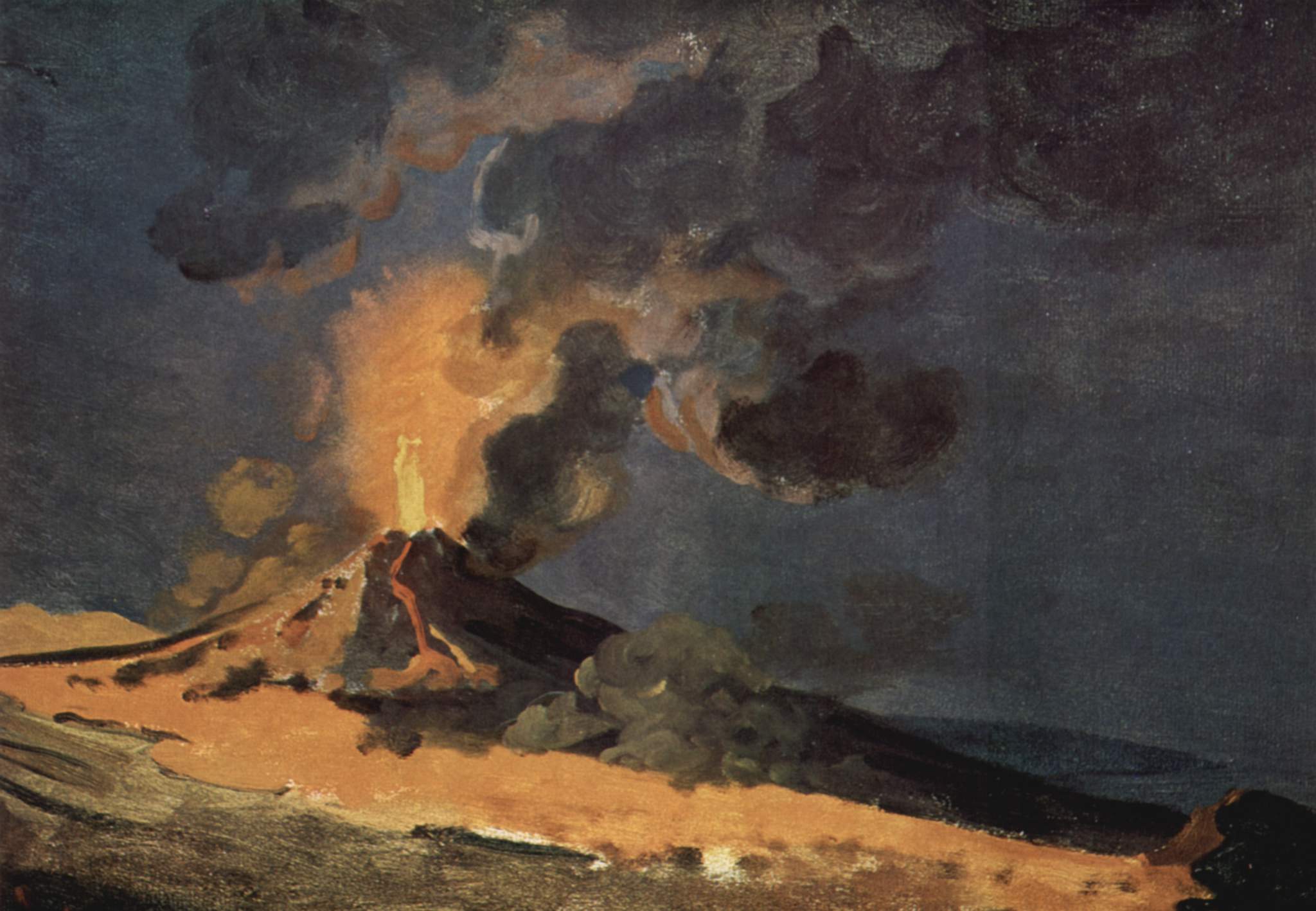
The following is a translation of an article from the Deutsche Zeitung in Nordchina (German Newspaper of North China) from 3rd October 1939. I've also found two further articles (here and here) from American newspapers in 1940, which talk about a plan to generate power by heating water over fissures near the summit.

What struck me most about the German article is the way that the technical language seems to take second place to the idea that this powerful giant is being made to bend to man's will, in an impressively futuristic (but suspiciously undetailed) undertaking. I would imagine that the reason for its appearance in a German paper in North China is to show the ingenuity and future self-sufficiency of one of Germany's allies, as well as being an engaging and inspirational piece of "news" in itself.

Many thanks to Tom for his help with the technical bits.


Vesuvius Power Station Planned. Italian Engineers' Bold Project.

By (Engineers) B. and H. Römer, Munich.

Modern science and technology is constantly engaged in the pursuit of new sources of energy and it is therefore not surprising that the question of using volcanic power has come in for consideration. In the country of Italy, which is not rich in coal, people are thinking earnestly about harnessing the gigantic amounts of energy which are stored in Naples' fire-spewing mountain, Vesuvius, energy which for the moment puffs uselessly into the air.

According to this latest project, a power station should be built in Atrio del Cavallo, the valley which extends between the 1186m high Vesuvius and the neighbouring 1120m high Monate Somma, in which the volcanic power can be put to use. From this position, man will attempt to assail the mountain and tame its fantastic, internal powers.

From its flank, a system of pipes made from fire-proof, unmelting material are to be inserted into Vesuvius' depositional cone, to reach the chimney of the volcano. This will divert those highly pressurised gases and vapours which accumulate due to the influx of flowing magma. With the introduction of the appropriate chemical processes, these gases will be made combustible and highly exothermic and will be used to fuel gas engines. It may also be possible to collect the vapours which circulate freely about the inside wall of the crater, to direct these through superheaters, and to use them to power turbines. These turbines will in turn move dynamos, which will generate electricity for a multitude of purposes. Italian researchers have calculated that the quantity of heat Vesuvius releases into the air every year is equivalent to the heat from over 1 million tonnes of coal.

Until now, it was only tourism which gave the famous Vesuvius a certain economic importance. However, through the exploitation of the gigantic, still untamed volcanic power, the mountain could gain the highest significance for Italy's energy industry. The project may today appear utopian, but one day man's ingenuity will make even this bold plan a reality.

Tuesday, 2 August 2011

History Misremembered

These sentences are taken from "English as She is Taught", a collection of answers given by American schoolchildren, published 1887. The whole thing is available in various formats here. These are simply the ones I liked best.

Longevity
Alfred the Great reigned 872 years.
Elijah was a good man who went up to heaven without dying and threw his cloak down for Queen Elizabeth to step over.
Luther introduced Christianity into England a good many thousand years ago. He was once a Pope. He lived at the time of the Rebellion of Worms.
Julius Caesar is noted for his famous telegram despatch I came I saw I conquered.

Technical Terms
Greece is divided into periods.
The history of Rome is wrapped in antiquity.
The Middle Ages come in between antiquity and posterity.


Animals in History
Gorilla warfare was war where men rode on gorillas. [Wishful thinking?]
The Celts were driven out of England into Whales.
Queen Mary married the Dolphin.
The only form of government in Greece was a limited monkey.


Personalities
Columbus knew the earth was round because he balanced an egg on the table.
Benedict Arnold was greatly regretted by the Americans as well as by the English.
Rufus was named William on account of his red hair.
The Britains conquered Julius Caesar and drove him ignominiously from his dominions.
Cromwell was only a parallel with Bonaparte.


Did You Know..?
The Puritans found an insane asylum in the wilds of America.
The Habeas Corpus Act said that a body whether alive or dead could be produced in court.
Slavery was caused by the admission of Missouri into the Union.


Floundering (or How to Answer a Question with no Information)
William Penn was born in Boston in 1607. He was the first white man who founded Pennsylvania. He founded Pennsylvania because his name was William Penn.
Gen. Washington is famous for the Washington Monument.

Friday, 21 August 2009

Trivia: Greater Britain

These extracts didn't really fit in with my previous post on Greater Britain (1900), but I thought they were too interesting to leave out completely. Here are three bits of antique trivia for your Friday afternoon enjoyment:

1. Origin of the phrase "white elephant" to describe something expensive but useless.

"Higher up the course of the Irrawaddy lies Upper Burma, which we took possession of more recently, to deliver it from the tyranny of its native king. Before that his subjects used to cross our border to be safe from their oppressor; and since it has become British the country is much more prosperous.
A well-trained elephant here is worth 5000 rupees, that is £500 of our money. Far more valuable, however, in the eyes of the natives, are the so-called "white elephants", in this part of the world reverenced as living idols. They are not really white, but piebald, with flesh-coloured or light-brown patches, a peculiarity perhaps caused by the animal rubbing itself against a tree to get rid of the flies that torment the cracks in its thick hide. Kings used to go to war for such a treasure, which at their courts would be lodged in a gilded pavillion, waited on by noblemen, and fed from vessels of gold - as if the poor beast were any better for such distinctions." (p.39-40)

2. Possible origin of the term "Indian summer".

"The autumn [in Canada] is generally a very pleasant time, when may be expected the short season of calm sunny days and gorgeously coloured woods which is known as the Indian summer. It is said to have been given the name by early American colonists, because the Indians then made their last raids against the settlements before snow came on to shut them up in the deep woods." (p.46)

3. Report of a macabre but somehow impressive mechanical toy captured in India, as well as an explanation of how hunting is a brave and manly pastime, but only if you're English.

"A menagerie of wild beasts often makes part of an Indian court; and the degenerate rajah, who perhaps dare not hunt them in their native jungle, takes delight sitting in a safe place, to see the captive creatures let loose on one another, for so does cruelty go with cowardice. The Sultan Tippoo, one of the worst of the tyrants from whom we delivered India, used to keep savage tigers in his palace to tear in pieces those who has displeased him and when his capital was taken by our soldiers, they found among his treasures a machine representing a tiger as large as life in the act of devouring an Englishman. in the body of it was a sort of organ giving out sounds to imitate cries of distress mixed with the tiger's horrible roar. This pretty toy for a sovereign to play with was brought home to an English museum. [...]
Such a [rich, Indian] sportsman does not much care to seek out a tiger alone, and meet him face to face, as Englishmen often will." (p.32-3)
The tiger is now in the Victoria & Albert Museum and there's a very informative description of it's origin, workings and symbolism here.