What's all this then?


My name is Victoria Stiles and I'm an Early Career Historian currently doing whatever odd research / consulting / outreach / tutoring jobs come my way. I blog here about some of the interesting texts I've found.
My research focusses on books about Britain and the British Empire which were in circulation in Nazi Germany but you'll also find a smattering of school textbooks, witchcraft beliefs, bog drainage, bemused travellers and weird illustrations that caught my eye.
Translations from German are my own. Comments are currently unmoderated and are mostly spam for leather jackets anyway.
Showing posts with label cuttings. Show all posts

Monday, 12 March 2012

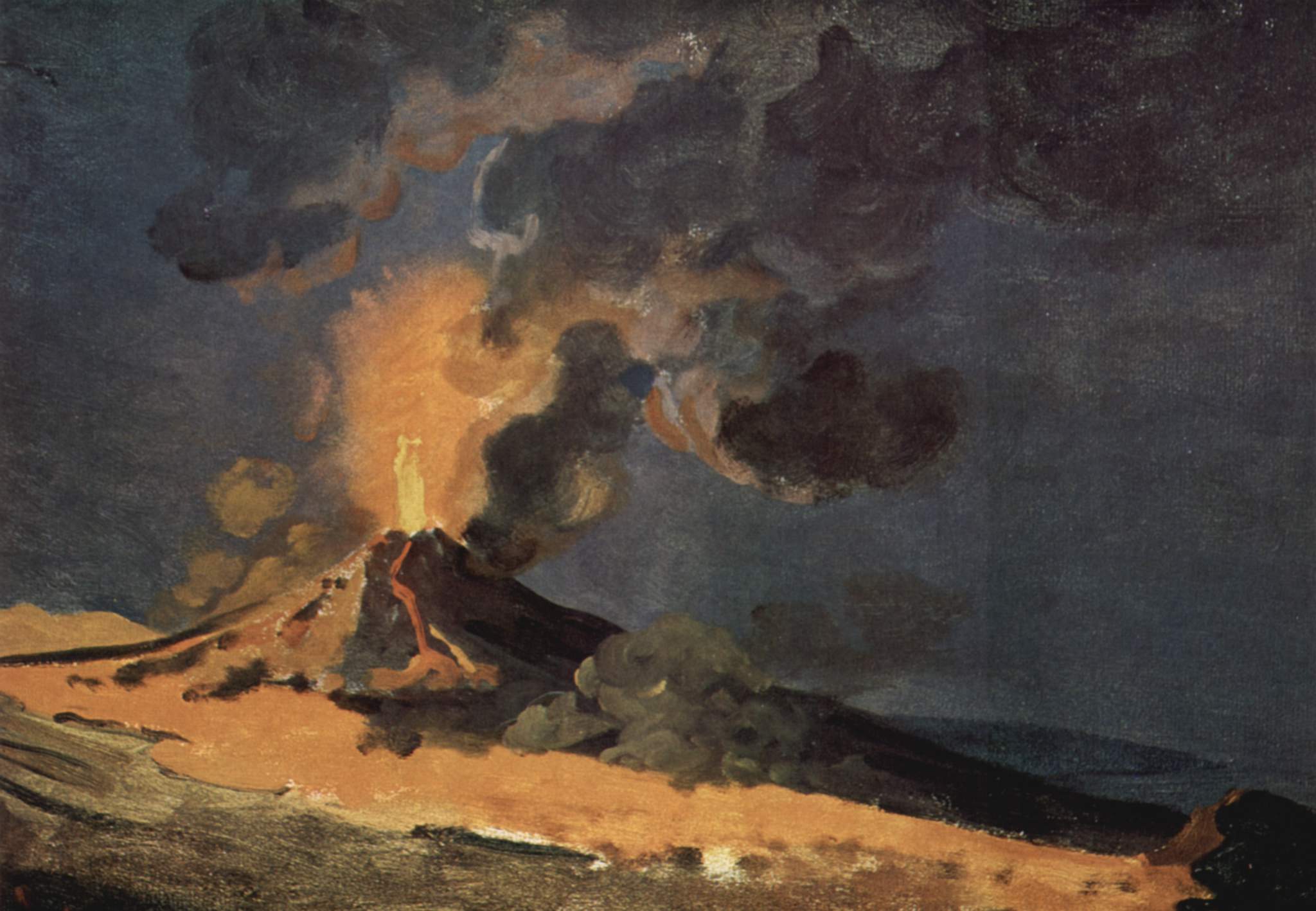
Power from Mt. Vesuvius, 1939


The following is a translation of an article from the Deutsche Zeitung in Nordchina (German Newspaper of North China) from 3rd October 1939. I've also found two further articles (here and here) from American newspapers in 1940, which talk about a plan to generate power by heating water over fissures near the summit.

What struck me most about the German article is the way that the technical language seems to take second place to the idea that this powerful giant is being made to bend to man's will, in an impressively futuristic (but suspiciously undetailed) undertaking. I would imagine that the reason for its appearance in a German paper in North China is to show the ingenuity and future self-sufficiency of one of Germany's allies, as well as being an engaging and inspirational piece of "news" in itself.

Many thanks to Tom for his help with the technical bits.


Vesuvius Power Station Planned. Italian Engineers' Bold Project.

By (Engineers) B. and H. Römer, Munich.

Modern science and technology is constantly engaged in the pursuit of new sources of energy and it is therefore not surprising that the question of using volcanic power has come in for consideration. In the country of Italy, which is not rich in coal, people are thinking earnestly about harnessing the gigantic amounts of energy which are stored in Naples' fire-spewing mountain, Vesuvius, energy which for the moment puffs uselessly into the air.

According to this latest project, a power station should be built in Atrio del Cavallo, the valley which extends between the 1186m high Vesuvius and the neighbouring 1120m high Monate Somma, in which the volcanic power can be put to use. From this position, man will attempt to assail the mountain and tame its fantastic, internal powers.

From its flank, a system of pipes made from fire-proof, unmelting material are to be inserted into Vesuvius' depositional cone, to reach the chimney of the volcano. This will divert those highly pressurised gases and vapours which accumulate due to the influx of flowing magma. With the introduction of the appropriate chemical processes, these gases will be made combustible and highly exothermic and will be used to fuel gas engines. It may also be possible to collect the vapours which circulate freely about the inside wall of the crater, to direct these through superheaters, and to use them to power turbines. These turbines will in turn move dynamos, which will generate electricity for a multitude of purposes. Italian researchers have calculated that the quantity of heat Vesuvius releases into the air every year is equivalent to the heat from over 1 million tonnes of coal.

Until now, it was only tourism which gave the famous Vesuvius a certain economic importance. However, through the exploitation of the gigantic, still untamed volcanic power, the mountain could gain the highest significance for Italy's energy industry. The project may today appear utopian, but one day man's ingenuity will make even this bold plan a reality.

Wednesday, 14 September 2011

Snippets - Seaside Fun in 1830s Lytham


The local history I was taught at school in Lytham St.Annes seemed to consist of a flood, a lifeboat disaster, and the building of a church in the middle of a lot of sand-dunes. They never told us about the fun, frolics and nutty stunts. These stories are all taken from the Preston Chronicle.

Walking Backwards. - On Tuesday last, at Lytham, George Edwards, a man of colour, walked backwards a distance of 10 miles, in one hour and 49 minutes, on a piece of ground half a mile in extent. He has also performed the task of taking up with his mouth, from the ground, 100 potatoes, one yard distance from each other, in forty-three minutes and 42 seconds, returning with each potatoe to the starting place. (Saturday July 30th, 1831)

Swimming Feat. - On Tuesday last, Dr. Bedale, of Manchester, in compliance with his previous anouncements, exhibited in presence of several hundred spectators, some of his peculiar and surprising feats in the waters of the Ribble. Soon after twelve o'clock, he appeared in a boat a short distance below Penwortham bridge, and having provided himself with a suitable garment, his legs were tied together, and he was thrown headlong into the stream, from which he soon rose and floated in different postures with the apparent lightness of a log of wood, and without any perceptible exertion. In this manner, and afterwards in a variety of postures, he swam and floated towards Avenham and returned with t
he ebb, to the gratification of the curious. In the afternoon he proceeded to Lytham to confer a similar gratuitous treat upon the visitants to that place, where he would find a wider scope for his skill in "wrestling with the ocean wave." (Saturday August 13th, 1831)

Bathing Exploits. - Sunday last, being one of those midsummer hollidays, with a high tide, of which the lovers of country excursions and salt water usually take advantage, a vast number of both sexes, and of all ages, set off for Lytham at an early hour, in carts and other vehicles, as well as on foot, "to lave their lim
bs in ocean's briny flood." About 60 individuals however, with greater pretensions to taste than to seek locomotion, by these every day-means, resolved to enjoy an aquatic excursion to the same destination ; and sweating, and puffing under a load of finery, they embarked, full of glee and expectation, at the Marsh end, on board the Lytham Packet and stood down the river. All appeared to betoken a day of genuine pleasure ; but, as fortune would have, it the Captain of the Packet and his mate had newly taken command, and not having sufficiently studdied Hamilton Moore's navigation ; while following their vocation of "spinning yarns," in this town ; being, in other words, fresh water sailors, before they had completed a third of their voyage, they ran the vessel upon a sand-band, to the g

reat alarm and chagrin of the passengers. There she stuck as fast as the obelisk, and after numerous attempts to gether off, which helped to bed her the deeper in the sand, the gay assemblage had but the alternative to stay aboard for the next tide, or submit to the dreadful necessity of making their way on shore, upon Longton Marsh, in the best way they could. The latter was, after a sage council of war, preferred, - and some of the females waded, and some were carried on shore, to the infinite detriment of their holliday garments. One lady in a lutestring dress was fairly soused under water, without having had the trouble to go so far as Lytham ' and divers were the mishaps to shoes, stockings, bonnets, and their etceteras. Even after landing they had new perils to encounter. The sea had left large pools and slimy ditches in the Marsh, over and through which they were force to push on as they could: they had next to scramble over dikes

and hedges, and experienced "hair breadth scapes" and "moving accidents, by flood and field," before they reached the village of Longton, where they had leisure to ruminate on their adventures, and wisely come to a resolution to make the next trip to Lytham upon Terra Firma. (Saturday August 4th, 1832)
Photo: bathers in 1834. There's more on wonderful nineteenth-century bathing suits from ModCloth, Thread for Thought and Clancy's Classics.

Wednesday, 22 June 2011

Cuttings - Wrexham, 1894 - Part II


Following Monday's revelations of a FRAUDULENT NUN in Glasgow, the editor respectfully submits to her readers' attention further extracts from The Wrexham Advertiser and North Wales News.


ART AND SCIENCE,
April 14

"Professor Fleming, the great authority upon electric lighting, is lecturing on the subject at the Royal Institute. He points out that in 1879 a Select Committee of the House of Commons reported that there was no reasonable scientific grounds for believing that the electric light would ever be a practical success. There are now 260 miles of mains in London, and quite 400 miles in the provincial towns."


LOCAL NEWS, April 07

"THE PHONOGRAPH - We invite our readers' attention to the phonograph which is at present on exhibition in the Blossoms Hotel Yard, Charles-street. Mr Garner, the proprietor, has a fine instrument, and the records are of a very superior kind. We have listened to several and can testify that they are exceptionally good. Mr Garner takes most of his own records, and has one of a cornet solo by Mr Lloyd, of the Blossoms Hotel. The proprietor takes more than an ordinary interest in the instrument, and his conversation concerning it shows he thoroughly understands it. No one who has an opportunity should fail to hear this marvellous invention."


FOOTBALL, April 21

"STOCKPORT COUNTY V. NANTWICH. - At Stockport, on Saturday. The home team, who were assisted by a stiff breeze, completely overplayed the visitors in the first half, and goals were obtained by Leigh, Smith, Hewitt, and Upton. At half-time Stockport led by four goals to none. After the interval McCoombe put on another point for Stockport. Nantwich then played up much better, but were unable to score, and retired beaten by five goals to none."

Monday, 20 June 2011

Cuttings - Wrexham, 1894 - Part 1

From the "General News" section of the four April editions of The Wrexham Advertiser and North Wales News, 1894. I'll post cuttings from "Arts and Science", "Local News" and "Football" on Wednesday, followed by advertisements and other bits on Friday. If I get some positive feedback, hopefully I'll make this a regular thing.


April 7th

"Alexander Douglas, alias Donaldson, was sentenced to four years' penal servitude at the Old Bailey, on Monday, for bigamously marrying Annie Crump, a young woman living at Birmingham, who advertised for a husband, and from whom he obtained a number of goods and £80 which she had saved. The prisoner, who is an ex-convict, pleaded in extenuation that his victim had shown great indiscretion, but the judge remarked that the prisoner in making this statement aggravated the offence."

April 14th

"On Sunday afternoon, Mr John Hutton, twenty-three years of age, Great Orton, near Carlisle, went for a ride on his bicycle and returned after a couple of hours' spin. On dismounting he fell dead. He had been suffering from influenza, and was under orders not to do any cycling for a month or two."

"It is announced from Berlin that in spite of the prohibition of the police, experiments have been made indoors with the bullet-proof coat invented by the German tailor Herr Dowe, who himself wore the coat and was shot at. The bullet-resisting property of the garment is said to have been proved. Herr Dowe sustained no injury."


April 24th

"The Bishop of Manchester, writing to the author of a pamphlet entitled, "A Few Plain Words to the Bishop," says that he "lives as plainly as any working man," works harder and more hours than nine out of ten of the working men, and yet is compelled by the expenses incidental to his office to spend £1,000 a year more than his official income."

April 28th

"At Glasgow, on Monday. Sarah McCormick pleaded guilty to falsely representing herself to be a converted nun from Lanark Convent, and inducing the public to pay to hear her recite alleged shocking revelations of convent life. She was sentenced to seven days' imprisonment. A charge against "General" Evans, of the Gospel Army, of aiding in the deception, was dismissed."
(Also appeared in the Birmingham Daily Post Tuesday, April 24, 1894)