What's all this then?


My name is Victoria Stiles and I'm an Early Career Historian currently doing whatever odd research / consulting / outreach / tutoring jobs come my way. I blog here about some of the interesting texts I've found.
My research focusses on books about Britain and the British Empire which were in circulation in Nazi Germany but you'll also find a smattering of school textbooks, witchcraft beliefs, bog drainage, bemused travellers and weird illustrations that caught my eye.
Translations from German are my own. Comments are currently unmoderated and are mostly spam for leather jackets anyway.
Showing posts with label 1930s. Show all posts

Sunday, 1 April 2012

Reading for the Reich

This set of advertisements to promote reading was offered to booksellers by the Bund Reichsdeutscher Buchhändler. They're taken from Börsenblatt für den deutschen Buchhandel, February 1936, and I wish I'd taken better photos.


"Your books are your best friends"


"Benefit from the experience of others, read technical literature!"


"Masters: let your apprentices read books!"


"Books help you through life"


"Use your free time, read a book"


Here's that last one as part of a display:


And because no part of 1930s Germany was all sweetness and light, one poster is a quote from Hitler about how he benefitted from extensive reading: " Still, nice tablecloth they've got in that window huh?


Do machines eat people?

"Or are they freeing them from slavery? Walther Kiaulehn's hard-hitting book "The Iron Angel" provides a chronicle of inventions from the antique to the modern age, a moving history of the spirit which created the machines, a cultural history of human work and power, a thoroughly optimistic philosophy of technology."

Book advertisement from "Börsenblatt für den deutschen Buchhandel", January 1936.

Monday, 12 March 2012

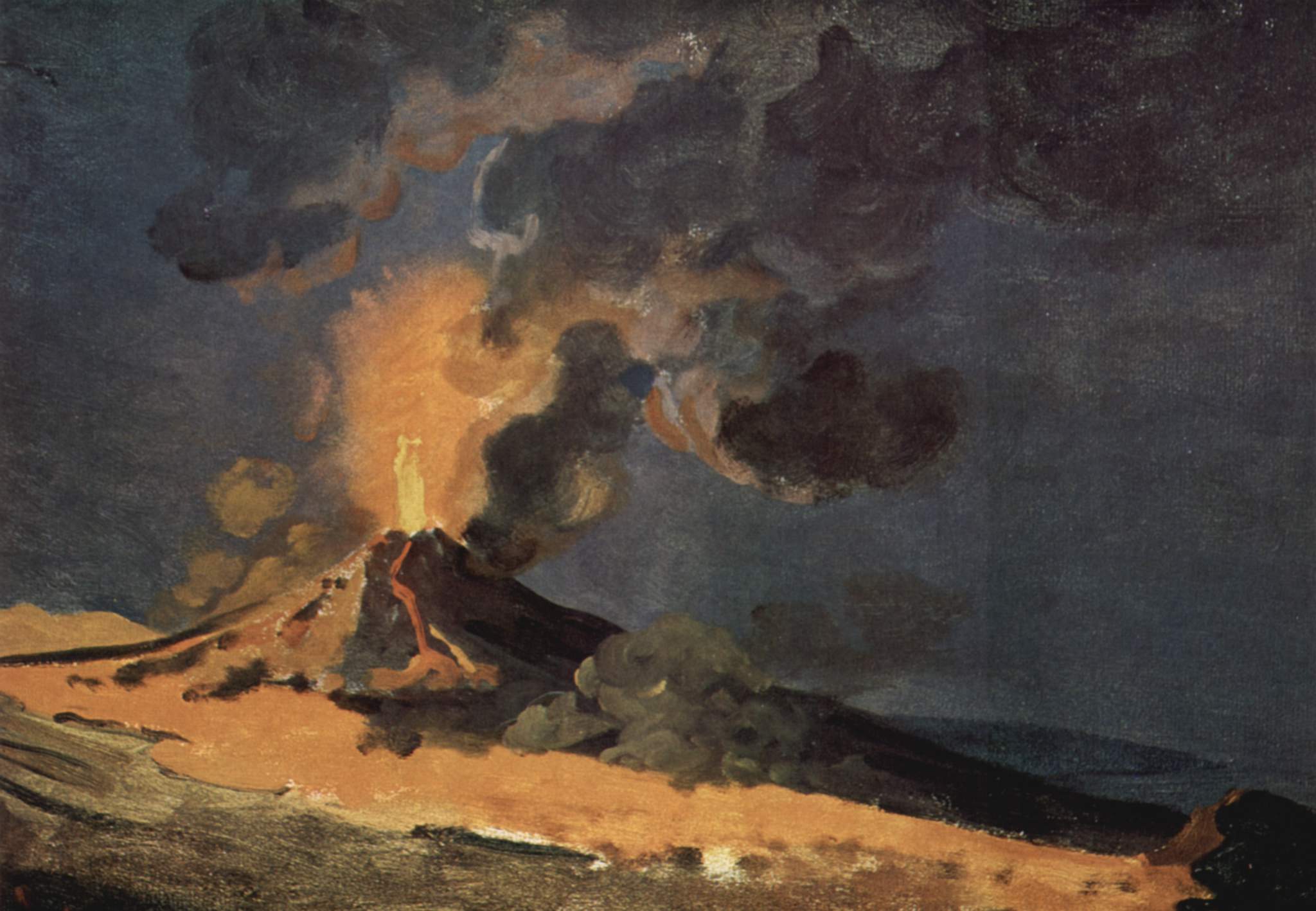
Power from Mt. Vesuvius, 1939


The following is a translation of an article from the Deutsche Zeitung in Nordchina (German Newspaper of North China) from 3rd October 1939. I've also found two further articles (here and here) from American newspapers in 1940, which talk about a plan to generate power by heating water over fissures near the summit.

What struck me most about the German article is the way that the technical language seems to take second place to the idea that this powerful giant is being made to bend to man's will, in an impressively futuristic (but suspiciously undetailed) undertaking. I would imagine that the reason for its appearance in a German paper in North China is to show the ingenuity and future self-sufficiency of one of Germany's allies, as well as being an engaging and inspirational piece of "news" in itself.

Many thanks to Tom for his help with the technical bits.


Vesuvius Power Station Planned. Italian Engineers' Bold Project.

By (Engineers) B. and H. Römer, Munich.

Modern science and technology is constantly engaged in the pursuit of new sources of energy and it is therefore not surprising that the question of using volcanic power has come in for consideration. In the country of Italy, which is not rich in coal, people are thinking earnestly about harnessing the gigantic amounts of energy which are stored in Naples' fire-spewing mountain, Vesuvius, energy which for the moment puffs uselessly into the air.

According to this latest project, a power station should be built in Atrio del Cavallo, the valley which extends between the 1186m high Vesuvius and the neighbouring 1120m high Monate Somma, in which the volcanic power can be put to use. From this position, man will attempt to assail the mountain and tame its fantastic, internal powers.

From its flank, a system of pipes made from fire-proof, unmelting material are to be inserted into Vesuvius' depositional cone, to reach the chimney of the volcano. This will divert those highly pressurised gases and vapours which accumulate due to the influx of flowing magma. With the introduction of the appropriate chemical processes, these gases will be made combustible and highly exothermic and will be used to fuel gas engines. It may also be possible to collect the vapours which circulate freely about the inside wall of the crater, to direct these through superheaters, and to use them to power turbines. These turbines will in turn move dynamos, which will generate electricity for a multitude of purposes. Italian researchers have calculated that the quantity of heat Vesuvius releases into the air every year is equivalent to the heat from over 1 million tonnes of coal.

Until now, it was only tourism which gave the famous Vesuvius a certain economic importance. However, through the exploitation of the gigantic, still untamed volcanic power, the mountain could gain the highest significance for Italy's energy industry. The project may today appear utopian, but one day man's ingenuity will make even this bold plan a reality.

Saturday, 4 February 2012

Hitler wasn't racist either, but...

Having written a bit about the problems of "trivialising" the Nazis last time, I hope I'm not going to come across as too flippant here. On the other hand, I didn't want to shy away from quoting Adolf Hitler directly*, as it's important to know what he said and what effect this might have had on his audience, rather than treating his words as though they'll conjure up demons. I'm not particularly satisfied with this translation, and have included the original at the end of this post for easy reference.

Although I found in difficult to render the crucial sentence (here in bold) in English, I was struck by how similar it is to sentiments expressed quite freely in Britain today; that there is nothing wrong with other races and cultures, but that they should exist seperately and the culture and rules of one should not be forced upon another. In this case, parallels are being drawn between British rule in India and Jewish "imperialism" in Germany. Nowadays, the fact that the European way of doing things was being exported long before the (alleged) attempted introduction of, for example, Sharia Law to European countries, tends to be ignored.
Our attitude towards other races is that of objective disinterest. Just as with the Indian people, the German people is made up of several races and tribes. The Indian people, with its four-thousand-year-old culture, has developed its own racial laws, which cannot easily be translated into a European context. Dr. Goebbels is quite right to say that it is incorrect to speak of races of lesser value. No race is inherently inferior to another; at most, the different races which populate the earth are of differing value. This applies also to the Jewish race. The Jew is not inherently inferior within his own environment, but his outlook is not a good fit for the German people, and can in fact be damaging. For that reason, the Jews must endeavour to live as a separate people. Each race must find within themselves their own world and this is why we are quite right to defend ourselves against another race's attempts to force their peculiarities upon us, as the Jews have done in Germany.
What I want to get across here is that fact that almost nobody wants to admit to being racist. Everyone knows that racism is unacceptable. However, there are many ways to twist the definition of racism so that it happens to exclude the views that you hold and the policies you are advocating. This goes for people even as unashamedly racist as the leaders of the Nazi party, if they were called upon to account for their views: they had nothing against other races, you understand, they merely recognised that different races have different strengths and weaknesses, and will thrive better in their own habitat. They were worried that combining more than one in the same place would inevitably cause damage. Every race has the right to an area which belongs only to them and not to have alien laws and habits forced upon them. If a race such as the Jews have no place where they belong then one can be found for them but really this is their responsibility. And, partly for their own good, they can't be allowed to take up space which belongs to another race. Of course they have nothing but our good wishes, so long as they conform to this natural order, but due to the difficulties involved and their unwillingness to cooperate then if they were to... disappear from this scheme it would greatly benefit the world in years to come. But none of this is "racist"; it's just recognising the nature of things. See?

There are very few self-confessed racists in the world, BUT... people still die purely because they are considered to belong to the wrong race for the bit of earth they're standing on. That fact should be what we reach for, when getting lost among the excuses.

*These words are from official notes taken of an interview between Hitler and Indian journalist Dr. Sinha, 6th December 1935. They are quoted in an article by Johannes H. Voigt: 'Hitler und Indien' in Vierteljahreshefte für Zeitgeschichte, vol. 19/1 (Jan. 1971) pp.33-63. It is not clear how accurately they record Hitler's specific phrasing.

"Unsere Einstellung zu anderen Rassen sei die einer objektiven Desinteressiertheit. Genau wie das indische setze sich auch das deutsche Volk aus mehreren Rassen und Stammen zusammen. Das indische Volk mit seiner vieltausendjährigen Kultur habe sich eigene Rassengesetze gegeben, die auch nicht ohne weiteres auf europäsche Verhältnisse zu übertragen seien. Dr. Goebbels habe ganz recht, wenn er es als unrichtig bezeichne, von minderwertigen Rassen zu sprechen. Keine Rasse sei an sich minderwertig; die verschiedenen Rassen, die die Erde bevölkern, seien höchstens untereinander anderswertig. Das gelte auch für die jüdische Rasse. Der Jude sei an sich nicht minderwertig in seinen Anlagen, aber seine Auffassungen paßten nicht für das deutsche Volk, sie seien vielmehr geradezu schadlich, und deswegen müsse der Jude dafür sorgen, daß er für sich allein als Volk leben könne. Jede Rasse müsse ihre Welt in sich finden, und darum wehrten wir uns mit Recht dagegen, daß uns eine andere Rasse ihre Eigentümlichkeiten aufzuzwingen suche, wie es die Juden in Deutschland getan hatten."

Saturday, 28 May 2011

Sehr geehrter Herr Hitler...

Fascinating latter from Hitler to a British newspaper, declining their offer to publish his thoughts on the economic crisis: http://www.lettersofnote.com/2010/06/yours-faithfully-adolf-hitler.html
I'm especially impressed by the translation, which has maintained the pompous, slightly rambling style of the original.

Wednesday, 31 March 2010

England's Mask has Fallen - Index

Another one from the British Library. England's Mask has Fallen (,,Englands Maske ist gefallen") is a 68-page paperback from 1939 with no attributed author. Priced at 30 Pfennig, it has the same cheap, flimsy feel to it as ,,Das ist England!" and the cover style is strikingly similar. I couldn't find a picture online (although there's what seems to be an abridged version knocking about on ebay and some rather questionable online bookshops) so a description will have to do.

Imagine, if you will, an angled, three dimensional map of the British Isles, with London marked as a black hole. Thin waves of smoke emanate from this blot, forming the shape of a looming figure of death, complete with scythe. In front of him is the disembodied head of Winston Churchill, with obligatory cigar and Union Jack top-hat. The title is jovially scrawled across the top in red, cartoonish letters. Classy, I think you'll agree.

For such a short publication, the index is amazingly detailed, although the subheadings don't appear in the main text (and until I read the whole thing, I wouldn't trust all of my translations):

The Strangler at her Side
England conducts an economic war - Pirates for centuries - The destruction of Poland is a slap in the face for England - English freebooters across the globe - How England robbed Spain, Holland, Portugal and France of their former power - The old enemy of neutral countries - Germany's correct treatment of neutral countries - England's blockade, this time without hope of success.

A Hero's Death for Money
England praises with silver bullets - Money, the soul of England's policy - Poland as the latest victim of English warmongering - South-east Europe withdraws from England's moneybag policies - Dishonourable English controls - The City charges usurious interest - England's currency wavers - Isolation attempts fall apart - Security in Europe only possible without England's machinations.

The Poison Trade
The infamous Opium War against China - A people's health is ruined - England destroys Chinese cultural artifacts - England's typical mass-smuggling operation - Use of violence against Chinese protests - England's ever-increasing blackmail of China - Trust in England not justified.

Protector of the Jews
The Jews rule in England - Kings and lords in the service of Jews - Jewish war profits in England for centuries - The Jew in the British Parliament - All influential positions overrun with Jews - Cromwell and Queen Elizabeth in Jewish hands - A Jew as British Prime Minister.

Hunger and Superstition
Areas of poverty in England - Terrible plight of the unemployed - A hundred thousand unemployed Englishmen undernourished - English working class families going hungry for years - The youth without vocational training - The impoverished people of England suffer from despair - Comfort through a love of gambling - The unemployed gamble away their pittance - Football betting a mass swindle - The richer England fails to care for the sons of its homeland.

An Empire Expires
Weakening vitality of the English nation - Decline of the population - Birth rates too low - England is aging - The old English hypocrisy - Birth rates in the British Empire also developing unfavourably - The English unwilling to raise families - 25 percent increase in birth rate needed to maintain England's population - The English no longer a pioneering people, but colonial rentiers - England's demographic and political decline.

Time is working against England
Germany has prepared in time - A long war is to England's disadvantage - England's currency in free-fall - England losing ground in world trade - Question mark over British Army's oil supplies - England's dependence on iron and food imports - England must risk her foreign possessions - England's gold reserves pumped dry - England's power is crumbling - Time is on Germany's side.


The two things that strike me about the structure, as set out above, are the amount of repetitions and the lack of chronology. I'll be interested to see how coherent the whole text is, and what level of detail is provided.

Wednesday, 18 March 2009

"Pleasant English" for unpleasant times

This book needs no long preamble to make it sound interesting. It’s an English textbook for years 7 and 8 of the German Volksschule and it was published in 1939, shortly before the learners were officially at war with the subject matter.


Its condition suggests that it had a similar life history to most schoolbooks. A certain Fräulein Ingelore Giesecke carefully wrote her name in pencil on the inside cover before it fell victim to inkblots, a cracked spine and the violent loss of page 15. The inside pages aren’t dogeared or faded so Miss Giesecke may not have been the most enthusiastic of pupils.

That’s enough whimsical speculation about the owner, it’s the foreword which deserves our full attention. It’s aimed more at teachers than learners and explains how the various features of this book should be used in class. It explains that the exercises, which are provided after each chapter of reading material, are to be given as homework and so they don’t “release teachers from the duty” of finding other ways to practice in the classroom. It explains that a glossary is provided at the end of the book so that students don’t need to waste time looking through a dictionary, and also that the approach to grammar and speaking is functional rather than theoretical. In fact it says roughly the same as the foreword to every textbook I’ve ever taught from. The interesting part deals with the newly-written reading material:

The reading material serves to widen the sphere of experience from domestic life to life in the wider communities involved in day to day life and to the values which determine the behaviour of the Englishman towards these communities. In essence, these values bear a northern-germanic stamp and have enabled Englishmen to achieve great and awe-inspiring works; of which the formation of the British Empire constitutes the greatest. It is necessary that we Germans recognise and appreciate the real, inherent qualities of the English in order to be able to value them as political allies, or so as not to undervalue them as enemies.
However it is even more important that the young German is brought up to be proud of his own national identity and to have confidence in his position in relation to other peoples, so that he does not – as was previously the case, particularly in Hamburg – fall victim to an unworthy idolisation of all that is English. It is the task of English instruction to instill a worthy, self-assured attitude towards other peoples; with the rewriting of this reading material I hope to have given the teacher a useable basis for the fulfilment of this task.
Der Lesestoff bringt die Erweiterung des Erlebniskreises vom häuslichen Leben zum Leben in den größeren Gemeinschaften des täglichen Lebens und zu den Werten, die die Haltung des englischen Menschen diesen Gemeinschaften gegenüber bestimmen. Diese Werte sind im Wesentlichen nordlich-germanische Prägung und haben den englischen Menschen zu großen, achtungsgebietenden Leistungen befähigt, deren größte die Schaffung des britischen Weltreiches bildet. Es ist für und Deutsche nötig, die echten, artgebundenen Werte der Engländers zu kennen und zu achten, um ihn als politischen Freund schätzen zu können oder als Feind nicht zu unterschätzen. Noch wichtiger ist es allerdings, daß der junge deutsche Mensch zu Stolz auf sein eigenes Volkstum und zum Selbstbewußtsein anderen Völkern gegenüber erzogen wird, um nicht, wie das früher und besonders in Hamburg der Fall war, einer unwürdigen Vergötzung des Engländertums zu verfallen. Zu einer würdigen, selbstbewüßten Haltung gegenüber dem Fremdvolk zu erziehen, ist Aufgabe des englischen Unterrichts; mit der Neugestaltung des Lesestoffes hoffe ich dem Lehrer eine brauchbare Grundlage für diese Erziehungsarbeit gegeben zu haben.

Task 1: Compare and contrast these stated aims with the assertions of schoolteacher Agnes Pernitz.

The book contains eighteen chapters, covering largely the same topics as English Life and Thought but from the point of view of a German family, the Petersens, who have moved to England. The two children, Peter and Katie, have things explained to them by various adults and friends, and come across as fairly stupid as a result. There’s information about life at an English school, sights in London, Christmas traditions (no Santa in Germany), typical suburban homes...

...London landmarks...

...and so on and, like with English Life and Thought, some parts are very much of their time. For example, when Peter tells his friend Morris that he will be joining his school, the exchange runs:

“Here is a piece of news for you. I am coming into your class,” said Peter.
“Cheers,” cried Morris, “We shall have great sport.” (p.49)
Although that’s nowhere near as dated as this incident on a day trip to the zoo:
When they came near the elephants, Katie gave a shriek.
“Negroes,” she cried, pointing at two coloured men who were in charge of the elephants. Peter laughed at her, for they were not Negroes, but Hindoos. (p.19)
The grammar exercise which follows their trip to the zoo is also not really suitable for the modern English class:


Then there are the parts which live up to the aims of the foreword. I’ll start off with a fairly mild one, in which Kate asks her teacher about British coins:
“All lawful coins of Great Britain and Northern Ireland are called Sterling which means “good”. And as a little German you may be interested to hear that this word is a compliment to your forefathers. As a matter of fact, early Saxon traders who came to this country from the East, that is to say from Germany, and who, therefore, were called Easterlings, introduced silver coins which were better than any other silver coins. They were honest tradesmen and the English people trusted their money more than anybody else’s and therefore all good money is called Sterling. You must feel proud of this fact, I am sure.”
Kate was a little confused about all she had heard, but, nevertheless, she did feel proud of her forefathers and grateful to Miss Allen for this explanation. (p.56)
As indeed all small children are when a simple question like “Why do you write d for penny?” is answered with a lecture on ancient history.

The Easterling Theory seems to have been around for a good while (at least according to the Wikipedia entry for Sterling Silver), with 'Easterlings' referring to the 12th century Hanseatic League. More on their importance for German nationalist historians when I finally finish some translations from Raubstaat England.

The next extract is from the chapter “Modern Youth”.
Peter explained to Morris that some of his comrades had been sent to Nuremberg during the Party Rally. They were to take part in the displays of the Hitler Youth Movement.
[...]
The envelope contained a number of snapshots which one of Peter’s comrades had taken on their march to Nuremberg.
“This is my patrol-leader,” said Peter. “Lucky fellow to be sent there. He is a decent chap, though.”
“They must have had a hard time to walk all that way from Hamburg to Nuremberg,” replied Morris.
“I should not have minded walking,” continued Peter. “Most of us are good walkers, and I like walking very much. By the way, we are trained to exert ourselves, and this march to Nuremberg is a glorious test of what we can do.”
Morris was interested in the uniform and at last asked Peter if he had his uniform with him. Then Peter took Morris to his room, put on his uniform and told Morris about camping, sports, and other activities and entertainments.
[...]
“Well,” said Morris at last. “I am going to be a Scout. Mr.Henderson, our gym-master, is a Scoutmaster. He has asked me to join the Scouts. But first I have to be a Tenderfoot. Then I shall have to pass an examination, and after that I’ll become a second-class Scout. It will be great fun, I am sure.”
[...]
“I wanted to be a Wolf Cub long ago,” he continued. “Dad said he did not mind. But my mother would not let me. She is always afraid that I may catch a cold. But Mr.Henderson persuaded her to give her permission.” (67-8)
And now for the world domination bit. Morris and Peter’s teacher is demonstrating the range of the British Empire using a globe (mentioning a few German colonies in passing, all of which are explained in footnotes. France doesn’t get a mention, naturally). How does our Average German Kid react to this geography lesson?
Peter was deeply impressed. But at the same time he was thinking of what the Fuehrer had said about the ‘haves’ and the ‘have-nots’ and saying to himself: “Well, one day we’ll have colonies of our own again, after all.” But he did not say anything about what he was thinking, not even to Morris. He had already learnt to keep his tongue and leave things to those responsible for his country’s welfare.(p.76-7)
This section is followed by a list of “countries and their inhabitants”, including “The Sudetenland”, which is inhabited by “The Sudeten Germans” (and no-one else, apparently).

None of the things I've mentioned so far provoked any emotions in me other than mild amusement at an obsolete view of the world and relief that we've put so much distance between then and now. With the benefit of hindsight however, the last chapter is more than a little poignant. The title of the chapter is “Hero-worship” and the two boys are visiting the Cenotaph in London. It struck me as quite ironic that such an idealised view of integration and multi-culturalism can be combined with references to trench warfare and the Hitler Salute:
Every man who passed on foot, in bus or car, raised his hat, and ladies bowed their heads as they passed the Cenotaph.
Peter was reminded of a similar scene which he had witnessed in Munich when he passed the Feldherrnhalle with his parents and every passer-by raised his arm to greet the Dead of the 9th of November.
77. the boys had stepped on in silence. After a while Morris broke the silence:
“One day I’ll take you to Westminster Abbey where the ‘Unknown Soldier’ is buried.”
Peter did not answer. He was thinking of his uncle who had been killed by an English shell in Flanders and whose body had never been found.
Morris felt that something had risen between them. At last Morris said: “I know, Peter, what you are thinking. You are German, and I am English. We both love our country and worship our heroes. That is no reason why we should not be friends.
[...] We are taught that England expects every man to do his duty, and I suppose you have similar sayings. But I do know that I could not be friends with a boy who is not willing to live up to what the Great Men of his country died for. I hope we shall always remain friends.”
Peter made no reply at first. He just caught Morris’s hand, and said: “Yes, William.” When they parted that night, they felt as they shook hands, that their friendship had strengthened. But they also felt that they were not mere individuals, but members of two great nations.

It's poignant because here we have two boys - fictional but with many real-life counterparts - admirably pledging to remain friends against the odds. The German boy has made every effort to integrate and the English have placed no unreasonable demands upon him. He can be German as well as a member of English society. The boys haven't forgotten the past, nor do they allow themselves to be unfairly constrained by it. They represent healthy skin covering the scars of the First World War, about to be ripped open again by the Second. Whether they survive or not, their friendship almost certainly won't.

The core material of the textbook is followed by a very strange assortment of supplementary texts: songs, poems, Christmas stories and a Punch and Judy script. There's a 25-page glossary at the back, organised according to chapter. There's also 25 pages of grammar notes, including the best diagram for English tenses of any textbook I've ever seen. You can take your 2-D timelines for a short walk off a long pier: